
The Definitive Guide to Single-Tooth Implants: Medical Realities, Costs, and Clinical Lifespans
Introduction: The Hidden Impact of a Single Missing Tooth
When an individual loses a single tooth due to physical trauma, deep dental decay, a vertical root fracture, or a failed root canal treatment, the immediate reaction often depends on where that tooth was located. If the gap is right in the front of the mouth—along the aesthetic "social zone"—it creates urgent cosmetic anxiety, prompting the patient to seek an immediate dental fix. However, if the missing tooth is a first or second molar tucked far away in the back of the mouth, the temptation is to leave it completely unaddressed. After all, if the gap doesn't show when you smile, and you can still chew reasonably well using the opposite side of your jaw, does it really matter?
From a clinical standpoint, leaving even a single missing tooth unaddressed triggers a destructive domino effect throughout your entire oral ecosystem. Your teeth are not isolated objects set into your jaw like stones in concrete; they exist in a state of dynamic structural equilibrium. They rely on their neighbors for bilateral support and press against the opposing teeth in the opposite jaw to maintain alignment.
The moment a single tooth is extracted or lost, this equilibrium is shattered. Within months, the surrounding healthy teeth begin to tip, drift, and rotate into the empty space. Simultaneously, the opposing tooth in the opposite jaw begins to over-erupt—uncontrolled shifting downward or upward into the vacant gap because it no longer has a biting partner to stop it. This process disrupts your natural bite, strains your temporomandibular joint (TMJ), and creates hard-to-clean food traps that rapidly accelerate gum disease and decay across your remaining teeth.
Even more concerning is what happens underneath your gums. Your jawbone requires the constant mechanical stimulation of chewing forces, transmitted down through the tooth root, to maintain its density and volume. When a tooth is removed, the surrounding alveolar bone loses its primary purpose. Your body naturally resorbs and shrinks the bone in that specific area. In fact, studies show a 40% to 60% loss of bone width and height in the extraction zone within the very first year.
If you are currently living with a gap or facing an upcoming extraction, researching high-quality
The Anatomy and Biomechanics of a Single Tooth Implant
The Three Structural Pillars: Implant Body, Abutment, and Crown
A single dental implant is a marvel of bioengineering. It doesn't simply mask a missing tooth; it replicates the complete anatomy of a natural tooth from root to crown. It is composed of three highly precise parts:
The Implant Body (The Artificial Root): This is a small, threaded, screw-like post made of medical-grade titanium or zirconium. It is surgically placed directly into the jawbone, completely underneath the gum line, where it takes over the structural role of the natural tooth root.
The Abutment (The Connecting Collar): This is a small titanium, ceramic, or zirconia connector that screws directly into the top of the implant body. It acts as an internal anchor that emerges through the gum tissue, providing a secure foundation onto which the final crown is bonded or screwed.
The Final Prosthetic Crown (The Visible Tooth): This is the custom-crafted, highly aesthetic visible portion of the tooth that matches the exact shape, shade, and translucency of your natural teeth. It is typically made of premium porcelain, metal-free E.max ceramic, or high-strength Zirconia.
The Phenomenon of Osseointegration: Titanium Meets Living Bone
The entire success of modern implantology relies on a remarkable biological process discovered by Swedish orthopedic surgeon Dr. Per-Ingvar Brånemark in the 1950s: osseointegration.
Titanium is a highly biocompatible metal. When a titanium implant is placed into living bone, your body does not recognize it as a foreign object or try to reject it. Instead, the surrounding bone cells (osteoblasts) begin to grow directly onto the microscopic, roughened surface of the metal.
Over a period of three to six months, this cellular growth locks the implant permanently into the jawbone, creating a seamless structural bond. Once fully osseointegrated, the titanium implant becomes a permanent part of your jaw, capable of withstanding heavy chewing forces without shifting, loosening, or irritating the surrounding tissues.
Single Tooth Implant vs. Traditional 3-Unit Dental Bridge
Before the widespread availability of dental implants, a missing tooth was routinely replaced using a traditional 3-unit dental bridge. While bridges are still a viable option in specific scenarios, they carry significant biological costs when compared to a single dental implant:
| Feature & Biological Impact | Single Dental Implant | Traditional 3-Unit Dental Bridge |
| Impact on Adjacent Teeth | Zero. Completely standalone. Neighboring teeth are left untouched. | Severe. Healthy adjacent teeth must be permanently shaved down into pegs to support the bridge. |
| Jawbone Preservation | Active. Transmits chewing forces into the bone, preventing bone loss and facial collapse. | None. The bone underneath the suspended fake tooth continues to melt away over time. |
| Flossing & Maintenance | Easy. You can floss normally between your teeth just like a natural tooth. | Complex. Requires a specialized threader to slide floss horizontally underneath the suspended bridge. |
| Average Lifespan | Lifetime. The implant post can last a lifetime; the crown may need a refresh after 15 years. | Limited. Typically needs complete replacement every 7 to 12 years due to recurrent decay under the anchors. |
Detailed Clinical Stages of the Implant Journey
Getting a single tooth implant is a structured medical journey completed in separate phases to ensure optimal healing, safety, and long-term success.
Phase 1: Comprehensive Diagnostics and 3D Virtual Planning
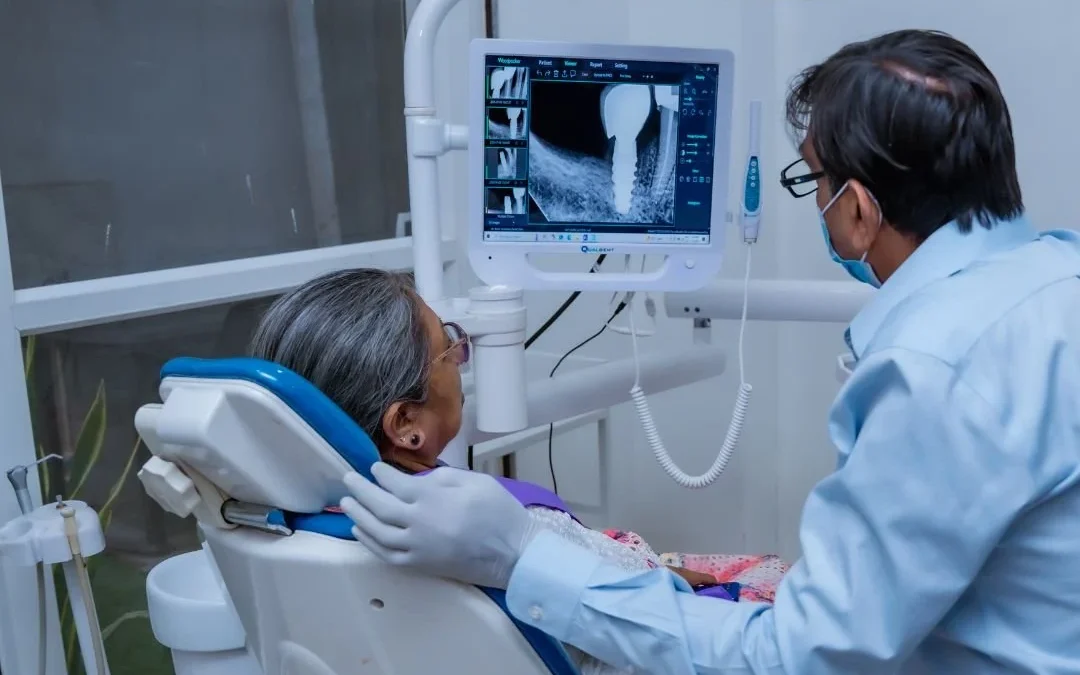
Your implant journey begins with advanced digital imaging. A standard 2D dental X-ray cannot capture the width, density, or three-dimensional volume of your jawbone. Your implantologist will order a Cone Beam Computed Tomography (CBCT) scan, which provides a pristine 3D digital model of your jaw down to the millimeter.
Using specialized implant planning software, your surgeon conducts a virtual walkthrough of your upcoming procedure. They evaluate the exact height and width of the available bone, map the precise path of neighboring tooth roots, and locate critical anatomical structures—such as the inferior alveolar nerve canal in the lower jaw and the maxillary sinus cavities in the upper jaw.
This virtual blueprint allows the surgeon to select the perfect length, diameter, and entry angle for the implant post long before the actual procedure begins, ensuring an exceptionally high level of safety and predictability.
Phase 2: The Surgical Placement Procedure
The surgical placement of a single dental implant is a highly refined, minimally invasive outpatient procedure that typically takes between 30 and 45 minutes.
Local Anesthesia: The surgical site is completely numbed using targeted local anesthetic agents. For patients experiencing dental anxiety, mild conscious oral or intravenous sedation can be used to ensure a completely relaxed, stress-free experience.
Creating the Incision: A small, conservative incision is made in the gum tissue to gently expose the underlying jawbone at the site of the missing tooth.
Osteotomy (Preparing the Site): Using a specialized surgical handpiece operating at a slow, controlled speed with a constant stream of sterile cooling saline, the surgeon creates a precise micro-channel in the bone. This channel is progressively enlarged to match the exact dimensions of the chosen titanium implant.
Implant Insertion: The threaded titanium implant body is carefully driven into the prepared bone channel. The surgeon monitors the insertion torque (the rotational force required) to confirm that the implant achieves excellent primary stability—a solid mechanical grip within the bone.
Placement of the Healing Cap & Closure: A small cover screw or a smooth healing abutment is placed over the top of the implant to protect its internal threads. The gum tissue is then neatly adapted around it and secured with 1 or 2 small, dissolving stitches.
Phase 3: The Healing and Osseointegration Window
Once the surgery is complete, the quietest and most critical phase of treatment begins: the three-to-six-month healing window. During this time, your body works behind the scenes to complete osseointegration, fusing your living bone cells permanently to the titanium threads.
While you wait for this biological process to finish, you will not have to walk around with an empty gap in your smile, especially if the tooth is in the front. Your dentist will provide a comfortable, aesthetic temporary tooth replacement option—such as a lightweight removable flipper denture, an invisible clear retainer containing a tooth shade insert, or a temporary resin bridge. This temporary option is adjusted so that it does not apply any direct pressure to the healing implant beneath the gums, protecting the delicate bone-bonding process.
Phase 4: Uncovering, Abutment Connection, and Final Digital Impressions
Once your surgeon confirms that your implant has fully osseointegrated and achieved solid stability, you move into the final restoration phase.
If the implant was covered beneath the gums, a quick, painless micro-incision is made under local anesthesia to uncover the top of the post. A collar-like healing abutment is attached for about 7 to 10 days. This smooth component guides your natural gums to heal in a clean, circular shape, creating an elegant, natural-looking gum line that perfectly frames your upcoming new tooth.
Next, your dentist takes a high-precision impression of your mouth. Instead of using messy, uncomfortable traditional impression pastes, modern clinics use an intraoral digital scanner. This handheld scanner captures thousands of three-dimensional images per second, creating a perfect 3D digital model of your implant site and surrounding teeth. This digital file is sent instantly via email to a specialized dental laboratory.
Phase 5: Fabricating and Securing Your Custom Permanent Crown
At the dental laboratory, expert technicians use advanced CAD/CAM (Computer-Aided Design and Manufacturing) milling machines to craft your permanent crown from a solid block of high-strength zirconia or premium ceramic.
At your final appointment, your dentist removes the temporary components and replaces them with your permanent, custom-tailored crown. There are two primary ways to secure your new crown:
Screw-Retained Crowns: The crown and abutment are fabricated as a single unit, and a microscopic screw secures it directly into the implant post. The tiny access hole on the biting surface is seamlessly covered with a tooth-colored composite material. This method is highly favored by modern implantologists because it allows for easy removal and maintenance during your annual checkups.
Cement-Retained Crowns: The abutment is screwed onto the implant first, and the custom crown is then permanently bonded over it using specialized dental cement. This approach is often chosen for front teeth to eliminate any visible access holes and deliver an absolutely flawless, uninterrupted cosmetic result.
Once the crown is securely in place, your dentist double-checks your bite to ensure that chewing forces are distributed evenly across your jaw. The moment you step out of the chair, your new single tooth implant is fully functional and ready to use.
Financial Logistics — Single Tooth Implant Costs in Gurgaon
Investing in your oral health requires clear, upfront transparency regarding the financial components of your treatment.
Price Spectrum: Understanding Brand Tiering and Technology
The cost of a single dental implant in Gurgaon generally ranges between ₹20,000 and ₹55,000+. This variance is not arbitrary; it is determined by the engineering quality, clinical research legacy, and structural warranties of the implant brand chosen for your procedure.
Implant systems are broadly categorized into three distinct market tiers:
1. Premium Global Tier (₹40,000 – ₹55,000+)
This premium category features world-renowned brands like Nobel Biocare (Sweden) and Straumann (Switzerland). These companies pioneered modern implantology and boast decades of peer-reviewed clinical research and exceptionally high long-term success rates.
Their implant surfaces undergo proprietary chemical treatments to speed up osseointegration, often reducing your healing window by several weeks. These systems are backed by an unconditional, international lifetime warranty, meaning any certified implantologist worldwide can easily access genuine components to service your implant if you ever travel or relocate.
2. Value and Mid-Tier (₹28,000 – ₹38,000)
This highly popular tier includes reliable global brands like Osstem (South Korea), Dentium (South Korea), and BioHorizon (USA). These systems offer an exceptional balance of modern engineering, reliable surface treatments, and excellent clinical success rates at a more accessible price point. They are an ideal choice for patients seeking a highly dependable, long-term solution without the premium cost of top-tier heritage brands.
3. Budget and Economy Tier (₹20,000 – ₹26,000)
This tier consists of localized or economy implant lines. While they provide an accessible entry point for tooth replacement, they may use older surface treatment technologies or have more limited component options for complex or highly customized cosmetic cases.
Breakdown of the Surgical Bill
A comprehensive, transparent implant estimate covers several essential components. When comparing costs, ensure your estimate includes:
Pre-Operative 3D Imaging: The CBCT scan analysis and virtual surgical guide planning.
The Implant Post Hardware: The sterile titanium fixture and its matching internal components.
The Surgeon’s Clinical Fee: Covers the specialized expertise of an Oral & Maxillofacial Surgeon or a dedicated Implantologist.
The Permanent Prosthetic Crown: The material you choose for your visible tooth directly affects the final cost:
Porcelain-Fused-to-Metal (PFM): Economical and strong, but can develop a faint gray shadow at the gum line over time.
Solid Monolithic Zirconia or E.max Ceramic: Metal-free, incredibly durable, and offers pristine, lifelike aesthetics that never fade or discolor.
Why Quality Diagnostics and Materials Save You Money Long-Term
Choosing a dental provider based solely on the lowest price can lead to significant structural and financial setbacks down the road. Shortcuts like skipping a 3D CBCT scan to save on diagnostic costs force the surgeon to work blindly, vastly increasing the risk of placing the implant at a poor angle or accidentally nicking a nerve pathway.
Similarly, choosing low-quality, unbranded implant hardware can result in micro-loosening, metal fatigue, or poor bone-bonding, which can lead to early implant failure. Investing in high-quality diagnostics and proven, well-documented materials ensures your treatment is completed safely and predictably the first time, protecting you from the stress and expense of revision surgeries.
Long-Term Maintenance, Care, and Complication Prevention
A single dental implant cannot develop a biological cavity, but it still requires the same dedicated care and maintenance as a natural tooth to ensure it lasts a lifetime.
Preventing Peri-Implantitis: The Main Threat to Longevity
While your titanium implant is completely immune to tooth decay, the living gum tissue and bone surrounding it remain vulnerable to bacterial infections. The primary threat to a fully osseointegrated implant is a condition known as peri-implantitis.
Peri-implantitis occurs when bacterial plaque accumulates around the base of the implant crown at the gum line. If left uncleaned, these bacteria trigger a chronic inflammatory response that breaks down the protective gum attachment and destroys the supporting jawbone beneath. As bone volume decreases, the implant loses its mechanical grip, eventually loosening and failing entirely.
Daily Care Protocol for a Single Implant
Maintaining your implant is simple and easily fits into your daily oral hygiene routine:
Brushing: Brush your teeth at least twice a day using a soft-bristled toothbrush and a non-abrasive fluoride toothpaste. Ensure you gently clean the interface where the implant crown meets your gum line.
Flossing: Floss daily to clear plaque from between your teeth. When flossing around an implant, gently guide the floss down into the gum pocket and wrap it in a complete circle around the base of the abutment collar. Avoid using aggressive sawing motions, which can damage the delicate protective seal of the gum tissue.
Water Flossers (Oral Irrigators): A water flosser is an exceptional tool for implant care. It uses a targeted stream of pressurized water to safely flush away food particles and microscopic plaque from deep within the gum pockets, keeping the area thoroughly clean.
The Value of Regular Routine Dental Checkups
Visiting your dentist every six months for a professional evaluation and cleaning is vital. During these routine visits, your hygienist uses specialized, non-scratching plastic or titanium scalers to safely remove stubborn tartar deposits from around your implant.
Your dentist will also take an annual low-radiation digital X-ray to monitor your underlying bone levels, ensuring the bone matrix stays perfectly dense, stable, and healthy.
Clinical Feasibility and Patient Selection Metrics
While dental implants are an exceptional solution for nearly anyone missing a tooth, specific biological and systemic factors must be met to ensure a safe, long-lasting outcome.
Evaluating Bone Volume and the Role of Guided Bone Regeneration
To support an implant predictably, your jawbone must possess adequate structural volume—specifically, enough height and width to completely surround and bury the titanium post. If a tooth has been missing for several years, or was lost due to an aggressive, deep bone infection, you may have significant local bone loss.
Fortunately, modern bone grafting techniques make it easy to rebuild lost jaw structures:
Guided Bone Regeneration (GBR): If your 3D CBCT scan reveals minor bone thinning, your surgeon can place high-grade particulate bone graft material into the site during your implant surgery. This material is covered with a protective collagen membrane, acting as a biological scaffold that guides your body to naturally rebuild its own dense bone right around the implant.
Sinus Lifts: When replacing upper back molars, the floor of your maxillary sinus is often very close to the ridge of your jawbone. A surgeon can gently lift the thin sinus membrane upward and place a bone graft underneath, creating a secure, thick foundation of bone to support the full length of an upper implant.
Systemic Health and Lifestyle Risk Factors
1. Uncontrolled Diabetes Mellitus
High, unmanaged blood sugar levels interfere with your body's natural cellular healing mechanisms and slow down bone remodeling. While controlled diabetes (confirmed by a stable HbA1c test result under 7.0) poses no extra risk, uncontrolled diabetes can delay osseointegration and increase the risk of post-op infections. If you have diabetes, your implantologist will work closely with your physician to optimize your levels before scheduling your procedure.
2. Chronic Tobacco Smoking and Vaping
Nicotine is a potent vasoconstrictor that temporarily narrows local blood vessels, reducing critical blood flow, oxygen, and nutrient delivery to healing gum and bone tissues. Clinical data shows that heavy smoking significantly increases the risk of early implant failure. Most oral surgeons strongly advise patients to completely stop using tobacco products for at least two weeks before surgery and throughout the entire initial healing phase to ensure proper, uninterrupted osseointegration.
3. Nocturnal Bruxism (Severe Teeth Grinding)
Patients who unconsciously clench or grind their teeth at night apply immense, repetitive mechanical forces to their jaw structure. While natural teeth possess a delicate periodontal ligament that acts like a microscopic shock absorber to cushion these forces, a dental implant fuses directly to the bone and lacks this cushion.
Uncontrolled grinding can cause micro-fractures in the bone or chip your porcelain crown. If you grind your teeth, your dentist will custom-craft a comfortable, durable nightguard (occlusal splint) to wear while you sleep, safely absorbing grinding forces and protecting your new smile.
Conclusion: Act Proactively for Long-Term Oral Health
A single missing tooth may seem like a minor cosmetic issue, but leaving a gap unaddressed opens the door to progressive bone loss, drifting teeth, and long-term bite complications. A single tooth implant is an exceptional, lifetime investment that restores your natural chewing power, protects your surrounding healthy teeth, and preserves your facial appearance. By acting proactively and consulting with an experienced implant specialist, you can lock in a healthy, confident smile that lasts a lifetime.
