
The Definitive Guide to Full-Mouth Implants: All-on-4, All-on-6, Clear Aligners Integration, Clinical Realities, Costs, and Lifespans in Gurgaon
Introduction: The Complete Oral System Breakdown
When a patient faces terminal dentition—a clinical state where the vast majority of remaining teeth are structurally compromised by advanced periodontal disease, widespread decay, severe bone loss, or comprehensive trauma—the consequences extend far beyond basic aesthetics. Living with extensive tooth loss or dealing with loose, slipping traditional dentures alters a person's entire biological, psychological, and social reality.
From a physiological standpoint, the inability to chew fibre-rich foods, fresh vegetables, and dense proteins forces a dramatic shift toward soft, highly processed carbohydrates. This dietary restriction frequently triggers systemic issues, including gastrointestinal strain, systemic nutritional deficiencies, and poorly managed metabolic cycles. Below the surface, the structural breakdown is even more severe:
Traditional removable dentures have long been a standard remedy, but they fail to address the core issue of bone preservation. Because a removable denture simply sits on top of the mobile gum tissue, it applies an unnatural compressive force to the underlying alveolar bone. Instead of stimulating the jaw, this compression restricts local blood flow and accelerates bone breakdown.
Over time, the jaw ridge melts away, causing the denture to lose its fit, slip unpredictably during speech, and cause painful friction ulcers. This loss of bone also compromises the vertical height of the lower face, causing the chin to rotate forward and upward, the lips to thin, and the face to take on a prematurely aged look.
For those facing these severe dental challenges, moving to a modern fixed restoration is life-changing. With high-quality dental implants in Gurgaon, patients can stop this degenerative process.
This guide details the biological mechanics, advanced surgical techniques, local cost expectations, and clinical steps involved in receiving a fixed
The Architecture and Biomechanics of Full-Arch Rehabilitation
Deciphering the Fixed Full-Arch Restorations
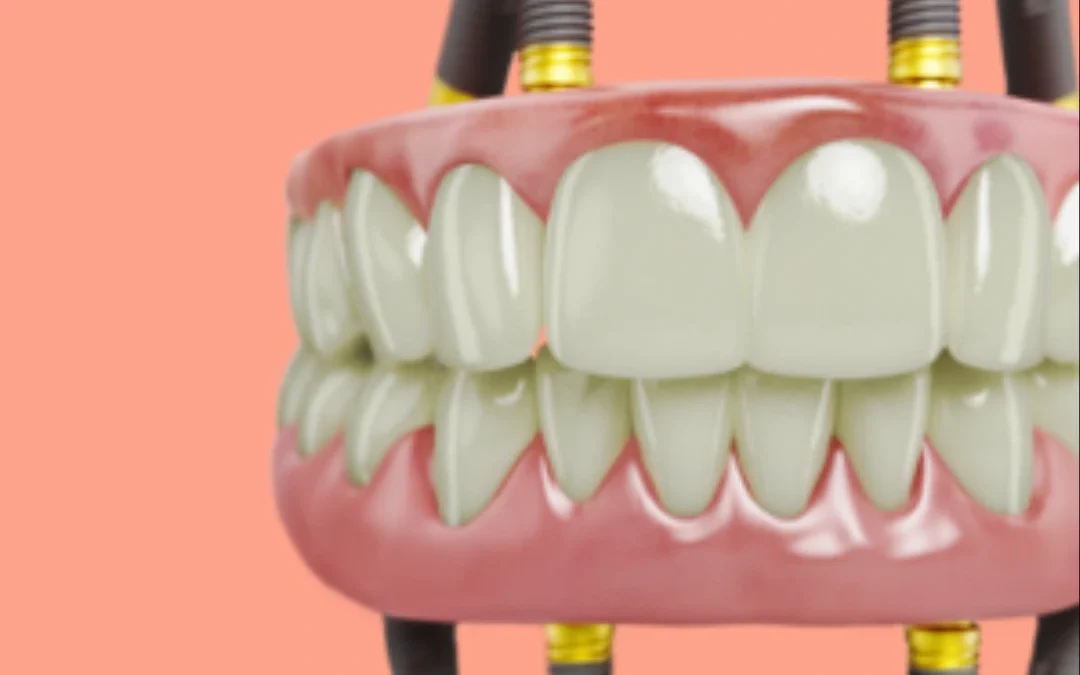
A full-mouth implant rehabilitation is a sophisticated marriage of structural engineering and biology. Unlike single-tooth replacements, a full-arch solution replaces an entire upper or lower row of teeth using a carefully calculated number of titanium implants acting as a unified foundation. This structure consists of three key components:
The Foundational Implants: A series of titanium fixtures placed into strategic anatomical locations across the jawbone to achieve balanced, stable force distribution.
The Multi-Unit Abutments: Specialized, ultra-precise interim connectors that screw into the implants. They allow the surgeon to correct angles and create a perfectly level path of insertion for the teeth, even if the implants are tilted to avoid nerves or sinuses.
The Fixed Prosthetic Arch: A complete, single-piece bridge replacing all 12 to 14 teeth in the arch. It is securely bolted onto the multi-unit abutments using internal micro-screws, meaning it can only be removed by a dentist for professional maintenance.
All-on-4 vs. All-on-6: Engineering the Optimal Load Matrix
Choosing between the All-on-4 and All-on-6 protocols is not about selecting a "better" package; it is an engineering decision based on the patient's individual bone density, jaw size, muscle force, and anatomical constraints.
The All-on-4 Protocol: Angled Posterior Strategy
Developed by Dr. Paulo Malo, the All-on-4 protocol places two straight implants in the front of the jaw and two rear implants tilted at an angle up to 45 degrees.
The Engineering Advantage: Tilting the back implants allows the surgeon to anchor them in dense, high-quality anterior bone while extending the support structure further back in the mouth. This eliminates the need for complex bone grafts or sinus lifts by safely routing around the nerve canals in the lower jaw and the sinus cavities in the upper jaw.
Clinical Indication: Ideal for patients with moderate to advanced bone thinning in the molar regions who want to avoid extensive bone grafting surgeries.
The All-on-6 Protocol: Distributed Vertical Strategy
The All-on-6 protocol utilizes six implants spaced evenly across the entire jaw arch, typically inserted vertically.
The Engineering Advantage: Adding two extra implants increases the overall surface area of the foundation. This wider distribution splits chewing forces across more anchors, reducing the physical stress placed on any single implant post.
Clinical Indication: Recommended for the upper jaw (which is naturally softer and less dense than the lower jaw), patients with wider jaw arches, or individuals with strong chewing muscles who exert heavy biting forces.
The Role of Clear Aligners in Pre-Implant Preparation
A common clinical challenge in full-mouth cases occurs when a patient has a few remaining teeth that are stable but severely misaligned, crowded, or extruded. If implants are placed directly next to these poorly positioned teeth, the final restoration will be structurally compromised.
In these specific scenarios, clear aligners serve as an excellent pre-surgical tool. Orthodontic aligners can shift the stable remaining teeth into ideal alignment, correct bite heights, and create exact, symmetrical spaces for the upcoming implant fixtures. Once the aligners establish a harmonious skeletal alignment, the surgeon can execute the full-mouth implant placement with maximum precision and symmetry.
Detailed Clinical Stages of the Full-Arch Journey
A full-mouth restoration is an life-changing procedure carried out across highly detailed diagnostic, surgical, and restorative phases.
Phase 1: Virtual Surgical Planning and Digital Smile Design
The success of full-arch therapy relies heavily on modern digital diagnostics. The process begins with a high-resolution 3D CBCT scan combined with an intraoral digital scan. These files are merged in advanced planning software to create a comprehensive digital twin of the patient's oral structures.
Using this digital model, the implantologist maps out the exact position of every implant post, carefully analyzing bone density along the entire pathway. The team then designs a computer-guided surgical stent—a custom, 3D-printed template that clips onto the jaw during surgery, guiding the drills to the exact depth, angle, and location planned on screen.
Simultaneously, Digital Smile Design (DSD) software analyzes the patient's facial features, lip movements, and speech patterns to map out the ideal tooth shape, length, and position, ensuring the final smile looks natural and balanced.
Phase 2: The Surgical Protocol and Immediate Loading
Thanks to modern surgical guiding tools, a full-arch procedure can often be completed efficiently in a single day, following a highly structured approach:
1. Sedation and Comfort: The patient is placed under deep conscious IV sedation or local anesthesia, overseen by an anesthesiologist to ensure a relaxed, completely pain-free experience.
2. Extraction and Debridement: Any remaining unsalvageable teeth are gently extracted, and any chronic inflammatory tissue or deep infections are meticulously cleared from the bone sockets.
3. Alveoloplasty (Ridge Contouring): The surgeon reshapes the jaw ridge to create a smooth, flat baseline of bone. This step creates uniform space for the new bridge and ensures the border where the new teeth meet the gums remains completely hidden when smiling.
4. Guided Implant Insertion: The 3D-printed surgical guide is secured, and the implants are placed into the bone through the template. The surgeon measures the insertion torque to ensure the implants meet the stability requirements for immediate loading.
5. Multi-Unit Abutment Fixation: Precision angle-correcting abutments are screwed onto the implants to level the path of insertion.
6. Immediate Provisional Loading ("Teeth in a Day"): A pre-fabricated, highly aesthetic temporary acrylic bridge is modified chairside to fit the implants perfectly and screwed into place. The patient leaves the clinic the same day with a functional, beautiful, non-removable set of teeth.
Phase 3: The Cellular Healing and Osseointegration Window
The temporary bridge remains securely fixed in place for three to four months. During this healing window, the patient must follow a soft diet—avoiding hard, crunchy, or chewy foods.
This dietary restriction is crucial: while the temporary teeth look and feel real, the implants underneath are in the delicate stage of bonding with the bone. Minimizing heavy biting forces prevents micro-movements that could disrupt the growing bone cells and compromise the healing process.
Phase 4: Definitive Restorative Transitions and CAD/CAM Engineering
Once the three-to-four-month healing period is complete and the implants are fully integrated, the patient transitions to their permanent teeth.
The clinician removes the temporary bridge and attaches digital scanning flags to the implants. An intraoral scanner captures the exact position of the fixtures down to the micron.
In the laboratory, technicians use these digital models to design a custom framework using CAD/CAM software. A high-strength titanium or cobalt-chromium structural bar is milled to act as the internal skeleton of the bridge, ensuring perfect fit and long-term durability.
Phase 5: The Final Restoration
The final teeth are crafted from premium materials like translucent monolithic zirconia or a porcelain-fused-to-titanium structure. The teeth are carefully shaded, characterized, and polished to mimic the natural optical qualities of real enamel.
The new permanent bridge is screwed onto the multi-unit abutments with precise, calibrated torque, and the small screw channels are filled with a tooth-colored composite material. The patient is left with a strong, functional, and exceptionally natural-looking smile.
Financial Framework — Full Mouth Implant Costs in Gurgaon
A full-mouth restoration is a major long-term investment in your health and quality of life. Understanding the factors that influence the overall cost helps you evaluate your options clearly.
The Full-Arch Pricing Structure
In Gurgaon, the cost for a full-mouth implant restoration typically ranges from ₹2,500,000 to ₹6,000,000+ per arch. This variance is driven primarily by the implant system tier, the total number of implants required, and the materials selected for the final permanent teeth.
1. Premium Heritage Systems (₹4,500,000 – ₹6,000,000+ per arch)
Utilizing world-class systems like Straumann (Switzerland) or Nobel Biocare (Sweden). These systems use advanced titanium-zirconium alloys and proprietary hydrophilic surface treatments designed to stimulate bone growth and speed up healing. They offer extensive clinical tracking data and include global lifetime warranties on all components.
2. Value Global Systems (₹2,500,000 – ₹3,800,000 per arch)
Utilizing dependable systems like Osstem (South Korea) or Dentium (South Korea). These systems deliver excellent clinical predictability, strong mechanical stability, and high-quality results at a more accessible cost.
The Material Choice Matrix
The material used to build your permanent teeth has a major impact on both the visual result and the total cost:
| Full-Arch Material Class | Structural Durability | Cosmetic Realism | Maintenance & Longevity |
| Hybrid Acrylic on Titanium Bar | Moderate. Acrylic teeth can wear down or chip over 5-7 years. | Good. Natural look, but lacks deep translucency. | Requires regular polish refreshes; more affordable entry point. |
| Monolithic Zirconia (Premium) | Exceptional. Virtually indestructible; immune to chipping and staining. | Superior. Incredible multi-layered depth, looks exactly like natural enamel. | Minimal wear over time; designed to last for decades. |
Diagnostic and Surgical Transparency
When reviewing a full-mouth implant estimate, ensure it includes all necessary stages of care to avoid unexpected costs. A comprehensive plan should explicitly cover:
All pre-operative 3D imaging, digital smile planning, and 3D-printed surgical templates.
The extraction of any remaining teeth and necessary ridge reshaping.
The immediate provisional bridge delivered on the day of surgery.
The final CAD/CAM milled permanent bridge with its internal titanium support bar.
Long-Term Preservation and Preventive Maintenance
While your new zirconia teeth can never develop cavities, maintaining the health of the surrounding gums and bone is vital to protecting your investment.
Understanding the Mechanics of Peri-Implant Mucositis
The most significant threat to a full-mouth implant restoration is plaque-induced inflammation. Because the permanent bridge spans across the entire jaw, it creates thin channels underneath where food debris and plaque can collect if not properly cleaned.
If plaque is allowed to sit beneath the bridge, it first causes peri-implant mucositis—a reversible inflammation of the gums. If left untreated, this condition can progress into peri-implantitis, a chronic infection that breaks down the supporting bone structure around the implants. As bone levels fall, the implants lose their foundational support, which can ultimately lead to total failure of the arch.
Home Care Routine for Full-Arch Restorations
Keeping a full-mouth restoration clean requires a few specialized, easy-to-use tools added to your daily routine:
High-Volume Water Flossers: An essential tool for full-arch care. Directing the water stream underneath the bridge flushes away trapped food particles and plaque from areas a standard toothbrush cannot reach.
Specialized Implant Floss: Thick, spongy floss designed to slide easily into the space beneath the bridge, allowing you to wrap it around the implant posts to clear away soft plaque safely.
Sonic Power Brushing: Using a high-quality electric toothbrush twice daily helps keep the junctions where the teeth meet the gum line perfectly clean.
Professional Maintenance Protocols
Patients with full-mouth restorations should visit their dentist every six months for professional maintenance.
During these visits, the clinician checks the torque of the internal screws, evaluates the health of the gum tissue, and cleans the underside of the bridge using specialized, non-marring tools. Annual low-radiation digital X-rays are also taken to verify that the supporting bone matrix remains dense, stable, and healthy.
Patient Suitability and Medical Selection Criteria
A full-mouth implant restoration can benefit almost anyone dealing with terminal dentition, but certain physical and medical criteria must be met to ensure a predictable, long-lasting result.
Evaluating Bone Volume and Advanced Reconstruction Techniques
Severe, long-term tooth loss often leads to significant bone thinning, particularly in the upper jaw where the sinus cavities naturally expand over time.
If a 3D CBCT scan reveals that the jaw ridge is too thin to support standard implants, specialized surgical techniques can be used to rebuild the foundation:
Advanced Sinus Floor Elevation: The surgeon gently lifts the thin membrane lining the sinus cavity and places a high-grade bone graft underneath, creating the necessary depth to securely anchor upper implants.
Zygomatic and Pterygoid Implants: For patients with extreme bone loss in the upper jaw who want to avoid extensive grafting, zygomatic implants offer an excellent alternative. These longer, specialized implants bypass the jawbone entirely and anchor securely into the dense, stable structure of the cheekbone (zygoma), providing a solid foundation for immediate new teeth.
Managing Systemic and Lifestyle Risk Factors
1. Bone Density and Osteoporosis Medications
Patients taking oral or intravenous bisphosphonates for osteoporosis require careful medical coordination. These medications slow down bone turnover, which can occasionally affect how the jaw bone remodels around a new implant. An experienced implantologist will review your medical history and coordinate with your physician to plan a safe, highly controlled treatment pathway.
2. The Impact of Chronic Nicotine Use
Nicotine constricts local blood vessels, reducing the vital flow of oxygen, nutrients, and immune cells to healing surgical sites. This reduction in blood flow can delay gum healing and slow the process of osseointegration. Patients who smoke or vape are strongly encouraged to pause all nicotine use for several weeks before surgery and throughout the initial healing phase to give the bone-bonding process the best possible start.
3. Managing Functional Stress (Severe Bruxism)
Patients who habitually clench or grind their teeth exert exceptional mechanical forces on their jaw structures. Because implants lack the flexible, shock-absorbing ligament found around natural teeth, these heavy forces are transferred directly to the bone and the prosthetic bridge. To protect a new full-mouth restoration from chipping or structural fatigue, the dentist will custom-craft a durable nightguard to distribute pressure evenly and cushion the smile while you sleep.
Conclusion: Reclaiming Your Quality of Life
Living with terminal dentition or unstable dentures can limit your diet, impact your confidence, and lead to progressive bone loss over time. A full-mouth implant restoration is a comprehensive, life-changing solution that restores full chewing power, protects your jaw structure, and recreates a natural, beautiful smile. By utilizing advanced 3D digital planning and proven implant techniques, you can look forward to a predictable, long-lasting result that truly transforms your everyday quality of life.
